Friday, September 02, 2016

Making the choice between shame and guilt


The massive development that is happening all over my city results in snakes and other wild animals losing their natural habitats and food sources. So, they stray into private properties and gardens to survive.
If you spot a snake in your garden, dial the number of the animal rescue department. They will come with their animal ambulance to take it to the snake sanatorium.
If your neighbourhood has stray dogs all that you have to do is punch the number of this department. If your stars are favourable, they may turn up.
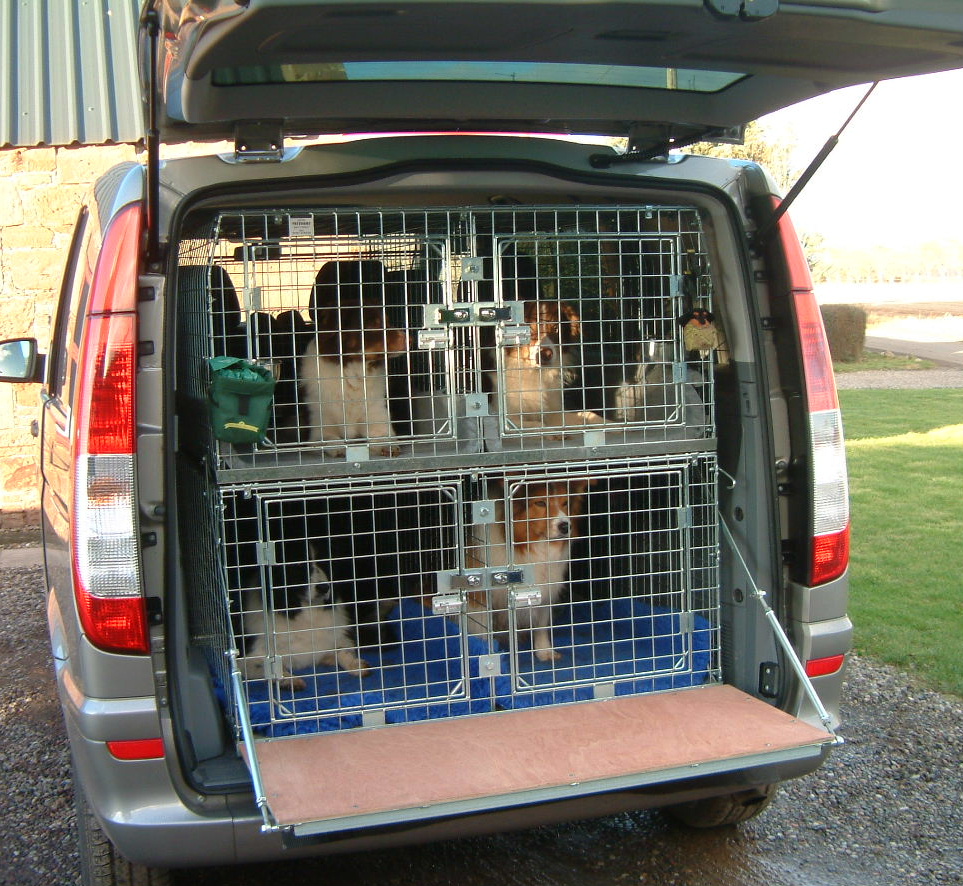
But by the time the dog ambulance is at the gate of the 25 acre campus where I live, all stray dogs disappear! The van comes with the dogs already caught. It is a noisy scene. The captive dogs bark and howl without stop. Maybe they are warning their fellow-creatures to run for their lives. They are concerned that their misfortune should not fall on them too. The stray dogs pick up the signals new prisoners send out.
But the scene in the snake ambulance is different. The captive snakes just huddle together in a corner of the cage. The snake catchers can catch more snakes easily because the captive ones are not sending out any signals to the free ones. The captive snakes don't even realise that they are in danger.
This leads me to a lesson that a wise old man taught me when I was much younger. On my maiden visit to Mumbai a mugger fooled me. With some hand-tricks, he just walked away with my money and gave me an empty wallet. I was so ashamed of myself that I was so easily fooled. So, I kept it as my little secret. But I had to disclose this to a close friend to borrow some money. The friend lent me the money but my little secret became the talk of the town within hours.
The news reached my friend’s father who was my mentor. One day, when I paid him a visit he asked me how did my visit to Mumbai go. I told him that everything was perfect and I really enjoyed it! He prodded further until he got the cat out. I had to tell him how that mugger walked away with my money. Then came the question: ‘Why do you hide this from your friends?’ Obviously, I didn’t have an answer. The old man continued after a contemplative pause. ‘Son!’ He continued. ‘Unless you share what happened to you, your friends will not be watchful. By telling them what happened to you, you help them to watch out and avoid what happened to you in their life.’
He dropped an apple on my head. I wanted to shout, "eureka!" Honest admission of our failures can help others as the captive dogs in the dog van do. They are probably ashamed that they were not smart enough not to be caught. They howl at the top of their voice to warn others to avoid what happened to them. What happened to them is shameful, but they don’t want to be guilty of not warning others. So, it is a narrow choice between shame and guilt. I think in such situations it is better not be guilty.

Friday, August 26, 2016

Why Revival Tarries?

I had been praying for a revival in the Seminary where I teach and the church I minister for a long time. It hasn’t come yet. I got this burden for revival from my teacher. She was a Canadian missionary who taught English at the Seminary where I did my first degree in theology. She stood up in a social gathering to make an announcement. The college was about to be shifted to a new campus about 600-kilometres away in a few months. She said that she is praying for a revival and praying that we will have it before we move to the new campus. It is almost 33 years since we moved to the new campus. Revival is yet to come!
Is God ignoring prayers for revivals? For that to be true we need to conclude that God is against revivals. Certainly not! God always want his people to be spiritually alive and constantly revive themselves. Holy Spirit, the spirit of newness is always with us.
This is simple logic. I won't' buy my son a car until he gets the driving licence. That is when he is ready to drive though he has been asking for it for a long time. I think that is the reason why revival tarries. Revival is certainly God’s plan for his people. God never denies prayer for revivals, but it gets delayed because the potential recipients are not yet ready. I want to emphasise it again—it is not denial but delay and we are responsible for the delay. Revival will come only when we are ready.
A review of the history of revivals tells us that that is how it always happened. Revivals always happened only through people who were waiting for it. Take, for example, the pouring out of the Holy Spirit upon the 120 gathered in Jerusalem. Jesus had directed them ‘to wait for the promise of the Father’ (Acts 1:4). Waiting, they did! They went to the upper-room, they were in one accord and devoted themselves to prayer (Acts 1:14). Finally, when they were ‘altogether in one place’ in the same upper-room the Spirit was poured out on them on the day of Pentecost (Acts 2:1-4).
This pattern of waiting and preparation in prayer along with a longing for revival is behind all revivals. Sometimes God prepares them in strange ways. For example, the Ao Naga revivals in India was possible because a tribal chief dead and gone had prophesied that a man with white skin will come and preach about a new god and they have to follow that God. The people were waiting for the man with white skin to come and preach for years. The tribal memory of this prophecy was like a piece of charcoal soaked in fuel, ready to catch fire. It caught fire and covered the entire Ao Naga tribe. Now 90% of Nagas are Christians. There are similar stories of God preparing people from Malaysia and other countries.
In any revival, there is a group of people earnestly waiting and praying for it. Prayer and the longing had prepared them to receive it. Then in the process, the revival encompasses in its embrace everyone even its critics. The first flame always fell upon an individual or group who were ready for it. It is like a forest-fire starting beginning with an ember from the bonfire the careless campers didn’t put out. It started really small with a group of people longing for it.
It never happened when people are not ready for it. All that we need to do is to be ready.

Wednesday, August 10, 2016

Praying is Doing

Our language of prayer has changed dramatically over the years. When people come to us with their problems we used to assure them that we will pray for them. Sometimes, we say ‘I will pray for you’ or sometimes we say, ‘you will be in my prayers.’ In reality, we often fail to keep the promise and forget to pray for them. Still, we keep saying that; it has become part of our formal language, like ‘thank you!’ We say that even when we really don’t mean it. It is like saying ‘good morning’ to our neighbour as we step out of the house in pouring rain on a clouded, bleak morning. So meaningless.
However, many people have polished this language now to be more honest and be real. It is rather popular now to say that ‘you will be in my thoughts’ than ‘in my prayers.’ That helps us to bail ourselves out of the guilt of not praying.

A promise of prayer is sometimes the best way to dismiss responsibility. Many times when we approach authorities and they say that they will pray about it, you can go home pretty sure that you are not going to get it! The language is so corrupt, it is something to hide behind and to dismiss the action.

However, Jesus seems to have given it a new meaning in Matthew 9:38. On his return from preaching the Kingdom of God in the various villages and towns in Galilee, he told his disciples what he saw over there. He had compassion on them since they were helpless like sheep without the shepherd. He also said that the people are ready for the goodnews of the Kingdom. Then he asked them to pray earnestly to the Lord of the harvest to send out labourers into his harvest.’ (Matt 9:38).
However, they did not have a prayer meeting after that! In the following verses (which is continuous with the previous, though in a new chapter) Jesus called them and sent them out to the fields that are ‘ready for the harvest.’

What do we make out of this? When Jesus said ‘pray’ to send, he really meant be ready to go! For Jesus, praying is preparation for going and nothing less. It is not praying that people other than the one who pray will go. It is a prayer where the one who prays gets ready to go.

This leads us to conclude that when we pray for something we take up the responsibility for that. For example, when we pray for the poor, we also take up the responsibility to do something about their poverty. Then we may pray for what is beyond our capacity having done what we can. Jesus, when he asks us to pray intends that we get involved first.

Friday, August 05, 2016

The Ready Harvest

Jesus looked at the world around him in a way that is quite different from that of contemporary Christians. In India, Christians are constantly intimidated by the news of persecution of Christians in various parts of the country. Laws that hinder preaching the gospel are passed in many states, pastors are attacked, churches are destroyed, etc. These pieces of news do make us view our world that is hostile to the gospel and the kingdom of God.
However, there is another way of looking at the same world. That is the view of Jesus. Don’t imagine that Jesus’ world was not hostile to him. He was ridiculed, physically attacked, finally killed. Though he had his share of enemies who from the very beginning was plotting to kill him, he looked at the same world as the world ready for the rule of God.
Jesus told his disciples that the world is ready for a big harvest. ‘Do you not say, There are yet four months, then comes the harvest? Look, I tell you, lift up your eyes, and see that the fields are white for harvest.’ (John 4:35, ESV).
It is true that a cereal crop like rice, wheat or barley takes three to four months to grow and ready for harvesting. But when Jesus says that the harvest is ready right then, before four months are over he implied the readiness of human hearts for God. Disciples waiting for the process of growth and fruiting, but Jesus says don’t wait for the process is already over and it is ready.
This is a real challenge. We have to have to have a positive outlook on the world we live. Christians should overcome the negative thinking that everyone out there is looking to kill us. No, they are looking for life. They have questions of life for which they are seeking answers. They have crises in life and are looking for solutions. The bible has the answer to all these but someone should go to them and tell them.
Here is the ready harvest. You will find them in your office floors, in the person sitting in the cabin next to you. Maybe the person sitting near you in the metro every day on the way to office is another heart that is ready for the harvest. If we don’t reap the standing corns of grain will be lost forever. It is time to get to the harvest.

Wednesday, August 03, 2016

Productive While Waiting

The Second coming of Jesus Christ is not a popular topic these days. Even preachers in premillennial or dispensational etc, also do not seem to talk about it these days.There could be various reasons for this trend. First of all, it seems the satisfaction many Christians feel now in the present world situation. The topic of second coming had served to a large extent to cope with the pain and suffering of the present day. People could live with their sufferings now since better days are coming. Secondly, it has to do with the aversion to the details that the preaching always came with. It seems that people are fed up with the lack of consensus in the identification of the Anti-Christ, number 666, the number 144,000 and such fringe elements. The irrationality and subjectivity of such interpretations are increasingly questioned. Preaching on the second coming in the days gone by focussed on details  for which there are no strong biblical warrants. So, over the years it has become the very unpopular topic.
However, Jesus' own teaching on his second coming was largely ignored. Jesus' second coming is an important part of Christian gospel. As long as we stick to the core teaching on this topic and avoid straying into unwarranted details. Preachers should not preach more than what Jesus preached. They should stick to the core teaching on this topic and avoid straying into unwarranted details.
There are certain things that are central to Jesus' teaching on his second coming. The first is the certainty. He will come. The second is unpredictability. He will come at a time that no one knows.
While teaching about the future of Jerusalem and his second coming Jesus told his disciples three parables in the Gospel of Matthew (Chapters 24-25). These three parables emphasise three aspects of Christian behaviour while waiting for the Lord to come. The first is the parable of the Wicked Servant (), the second being the parable of the ten virgins (), the third being the parable of the talents (). These three emphasise three important things. The parable of the wicked servant warns misbehaviour that results from ignoring the master's coming. The second (story of ten virgins) talks about the possibility of missing the joy of his coming not being ready for it. The third emphasises that the time of waiting is a time of productivity.


Wednesday, July 27, 2016

Preachers of Vanity

A few Sundays back I visited a large church in a major city of India. I have heard about this church and has been eagerly waiting to be there. As usual, there was ‘praise and worship’, then announcements in video format about the seminars, workshops and a whole lot of activities that the church organises. Then the senior pastor stood up to preach. Before preaching he gave another run-down of the announcements orally.
The preaching was quite long. It was about the place of Israel in the Bible. He started with Abraham, through Egyptian bondage, Exodus all the way to Babylonian captivity and return. It continued further on to the Maccabean revolt, and all the events between the destruction of Jerusalem in AD 68 and then the end of British Mandate and the formation of Israel in 1948. I though he will end there but he went on Camp David agreement, the present situation including the murder of a Jewish girl by a Palestinian which took place a week before. Then the sermon ended with a call to pray for Israel.
I noticed that at least some people in the pews were restless, some were sleeping tight, some were on WhatsApp pretending as if they were looking up bible verses (all that were on the two screens!) While we were walking out my wife asked me will this crowd return next Sunday too, to hear such a sermon? I said ‘yes.’ I will explain why if you would hang on.
Before that, I should narrate another incident. This happened in my church. I invited a guest speaker. I have never heard him before in my life, but he had invited me many times to his church. So, it was a time to reciprocate I thought; moreover, I need a change as well as my congregation too.
To my surprise, the guest preacher stood up and gave us a lecture about how the Bible came to us starting from the manuscripts, editions and translations. The congregation was thoroughly disappointed. My congregation returned the following Sunday because they knew the guest preacher is not going to be there.
In many urban congregations in India, the pulpit tends to lean away from the Bible. There is a conspiracy in the pulpits. That conspiracy is to avoid the Spirit speaking to us. It is a conspiracy to avoid Bible addressing the real issues of life. It is a conspiracy to mute the Word of God so that we don’t want to be rebuked and corrected by God. It is a conspiracy to keep God out of our life.
This conspiracy is carried out by speaking about issues that belong to another realm. To talk about things that do not really matter to our walk with God. In some pulpits, they talk about how to be successful and the like—biblical versions of Shiv Kera, Robin Sharma and others. Five days of the week, committed believers have heard such voices and they have lived it in order to eke out a living in this world. There is an eternity waiting for them. The preacher's responsibility is to guide them to lead their lives in this world with eternity in view.
Week after week the same crowd returns. To learn what they already know. They return to their homes and their offices believing that what they learn and practice in their corporate offices is what the Bible also teaches. They fail to understand that the Bible is not a volume of footnotes to what we know, it is the Word of God that challenges us, to raise us to new levels of understanding of our world and its realities. They fail to know that we are on a journey, a pilgrimage. We are sojourners whose eyes are fixed on a city that has foundations.

Why do they return Sunday after Sunday? Because this higher view is hidden from them. So, they come to satisfy themselves with water that makes them thirst again and bread that only causes more hunger.

Wednesday, July 06, 2016

Not so powerless!

After sermon last Sunday, we had a brief time of worship and I faced the congregation again. This time, to show a video circulating in my WhatsApp group. The video is about a homeless man who survives on stolen dog food somewhere in the US. I then showed the picture of a 17-year-old and his 80-year-old great-grandmother who lives on the pavement outside our church. The picture was sent by one of our own young members. The boy works in a nearby coffee shop for food for himself and this old lady and lives under a blue plastic sheet on pavement. Much awaited monsoon rain has arrived in the city. Though it brings joy and relief to our hearts, it makes the life of many with leaking roofs and especially who live on the pavement miserable. After speaking about their miserable condition, my moistened eyes scanned the congregation. Mine was not the only pair of eyes that are wet, I was moved to find that many are wiping their eyes. Then, after a brief pause, I continued, 'Brothers and sisters, when it comes to the suffering of this magnitude, being a small church, we are helpless and powerless. All that we can do for them is to have a heart of compassion and pray.' Then we brought the service to a conclusion with prayer and benediction.
As I walked down the aisles after meeting a few people who had come to the front to greet and appreciate the sermon, I noticed a commotion at the entrance of the church. Someone has brought this boy from the street and his old relative to the church. People are all around them. I ordered a coffee and some biscuits and thought my job was over.
The boy said that it is pouring rain outside. One of our church members came forward and offered to take her home. I could not advise her against the decision, or to make her think twice about it. Someone quickly made a rota to feed them.
My wife had a call at night. The new host for this destitute is calling. She lives in an apartment complex. Her neighbours are not happy with her quests. She wants her to find them a place as soon as possible? The following day was busy. My wife called up a Christian Old Age home. They said it is not for people on the street. It is for people who can pay, about Rs 15000 per month. She called up two or three such places--Catholic, Adventist, etc. This time, we were more ecumenical than ever before! Sisters of Charity is full. Some Christian old age homes said that they don't take any who are above sixty.
Helpless, we sat down. Frowning the enthusiasm of the 'immature' members of the church who dragged this old woman, who can hardly walk to the church. Both of us agreed that our youth need more discernment, they jump the gun. That doesn't solve the problem. We need to get this woman and the boy out of our church member's house. We can't take them back to the pavement.
That was the night we thought of an acquaintance who died a month ago. He had lot of dreams for God. But before he could achieve much he died in his sixties. I heard that his son has taken over and continuing the ministry. Someone had told me that they run a home for children and old people. I rang up, but only to be told that they don't take old people who need assistance. However, I was able to convince them.
So, we made the four-hour drive to the home for the destitutes yesterday. On the way, we heard their stories. When the boy was six months old his mother left him with his grandmother never to be traced again. Someone later gave him a black and white picture of his mother which he still keeps in his pocket. After staying with some relatives, he finally came to stay with his great-grandmother. When she was old, her own children evicted her from her house. She could work and earn a living then, so they moved to a small rented hut. The grandson contributed doing small jobs quitting school. Finally, they ended up in the street when they could not pay the rent.
The boy would like to study. He has done up to seventh grade. He loves drawing. He has learned horse-riding. He even came up in the seventh position in a horse race when he was working for a holiday resort on the hills. Though he was in the streets, he has never touched tobacco or drugs. They lived just outside the McDonalds and people gave them the left-overs they had packed to take home. Sometimes, the staff in the Mac also fed them.
The journey was long, but I enjoyed it. The shine in the eyes of the old woman was so brilliant it lighted up the cabin. It was foggy and raining outside with poor visibility. She has never travelled in a car. She looked at her grandson curiously as we overtook a container truck. He explained to her that the 'big-box' has come from a distant country by ship. Then there was oil-tanker, he pointed to a waterfall as we went past it. It seems that she enjoyed the trip.
Finally, we reached our destination and handed over our guests to their new caretakers. While we were filling and signing the documents, the young boy took a walk around the campus that is going to be his home. The old woman sat in a chair with walking club with her eyes still beaming. She will have a roof over her head and meals every day. She will not be hungry anymore and the boy is planning to go to school. In two years time, he will qualify to earn a decent living and lead his own life with dignity.
I came back with one of the kind church members who had accompanied me on the long trip. Before going to bed, I reflected on the last two days. From projecting their images in the church. My concluding words that day kept haunting me. I had told the church, 'When it comes to suffering of this magnitude, all that we can do is pray!' It seems that there was some in my congregation who did not believe what I said. They thought something more can be done. They dragged me into a situation where I had to rethink, there was something more we could do. As Paul said, 'We can do all things through Christ who strengthens us.'
We are not alone in doing good things. When my wife took the old woman to a doctor for a certificate, the doctor refused to charge her the fees. He humbly said that it is his contribution to the kindness we show. An old man whom I never met called up to appreciate what we have done for them. He wanted to meet me. It seems that he lived nearby and used to see them on the street every day. On my way back one of the church members called me on the phone to say that he will pay all the expenses involved in this. When I finally reached home there was another surprise. Another church member who missed the church last Sunday and totally unaware of what is going on has contributed Rs 5000 towards the church's charity fund.
I had my lesson. When it comes to the suffering of great magnitude we are not that helpless and powerless as we think. Moreover, we are not alone. We are surrounded by kind people and above all God who makes all things possible is with us. All that we need is a heart of compassion and of faith.