
The Smoking Meat-Eating Swami


Typically, we imagine a revered spiritual monk as a quiet figure subsisting on fresh vegetables, clear water, and pure air, untouched by worldly habits. However, Swami Vivekananda challenges this traditional image entirely. His life was characterised not by a strict adherence to conventions but by practical wisdom, profound humanity, and a bold rejection of superficial dogma.
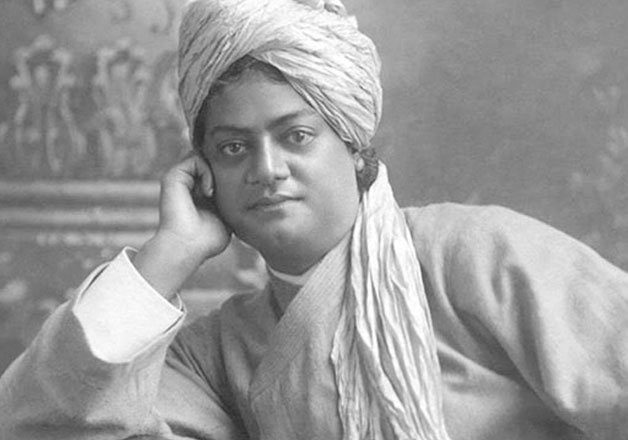


Throughout his life, Vivekananda regularly enjoyed cigars, pipes, and the traditional Indian hookah. It was a habit he picked up in his youth and maintained during his travels across India and abroad. Yet, for him, a simple pipe could carry profound spiritual meaning.

During his wanderings across India, he once asked a man from a lower caste for a smoke from his hookah. When the man hesitated because of the era’s strict customs of untouchability, Vivekananda initially walked away—only to turn around immediately, realising that bowing to caste distinctions violated his core belief in spiritual unity. He took the hookah and smoked from it anyway, turning a simple puff into a bold statement on universal equality and oneness.

Vivekananda brought that same pragmatic mindset to his views on diet. While acknowledging that absolute non-violence (Ahimsa) and vegetarianism were noble spiritual ideals, he actively defended meat-eating when practical life demanded it.

He viewed a purely vegetarian diet as ideal for secluded, contemplative monks (Sattvic), but argued it could be detrimental to everyday people who required physical endurance for hard work and nation-building.

During the late 1890s in Calcutta, he urged young Indians to eat meat to overcome physical weakness and lethargy, calling for a generation with "muscles of iron and nerves of steel" to break free from passivity. Writing to his followers from the West, he even advised against enforcing strict vegetarianism on Western converts, telling a disciple that "good meat" was far better than a weak vegetarian diet when health and vitality were at stake.

Ultimately, Swami Vivekananda taught that spirituality is lived from the inside out. Health, strength, and genuine human connection take priority over rigid dietary rules and superficial judgments.


(From my forthcoming book: Swami Vivekananda. The Hindu I Admire)


Popular posts from this blog

Pandita Ramabai versus Swami Vivekananda: Two Visions of India

This is more than a story about two remarkable nineteenth-century Indians. It is a story about two competing ways of seeing India itself. Pandita Ramabai and Swami Vivekananda were contemporaries, reformers, and influential voices who introduced India to the Western world. Swami Vivekananda (b. 1863—d. 1902 and Pandita Ramabai (b. 1858—d.1922) were contemporaries for about 39 years. Pandita Ramabai was five years older than the Swami and lived 20 more years than he did. Both individuals had connections to Brahmo Samaj. Swami Vivekananda was an official member, whereas Pandita Ramabai closely aligned with its principles and members but did not formally join. When Ramabai arrived in Kolkata in 1878, she received a warm welcome from Brahmo Samaj leaders such as Keshab Chandra Sen, who was notably impressed by her Sanskrit skills and encouraged her to study the Vedas, which were traditionally restricted to men. Although she adopted many of the movement's social reform ideas—such as opp...

A Chat With God

A Chat With God : Prayer can sometimes be a tough thing for people. This video takes a look at some of the struggles and thoughts a person might have with prayer, through the lens of a 'chat' conversation with God.

While Waiting for Home

 “For here we have no lasting city, but we seek the city that is to come. Through him then let us continually offer up a sacrifice of praise to God, that is, the fruit of lips that acknowledge his name” (Heb 13:14—15). Living as a foreigner is a strange experience. Nothing belongs to them in the country where they live. If the foreigner is a newcomer, he needs help to make sense of things happening around him. Homesickness is high in the first few weeks, though it may wear out as time goes on.  Christ-followers are sojourners on earth. Saint Peter calls them "sojourners and exiles" (1 Pet 2:11). The writer of Hebrews depicts them as people waiting in a foreign country for their permanent residence or a city that is to come. Paul reminded the church in Philippi, though they are Roman citizens that their real citizenship is in heaven, where Jesus is. "But our citizenship is in heaven, and from it we await a Savior, the Lord Jesus Christ…" (Phil 3:20). Christ...